
🐻 Think about collaboration
Nike x Tiffany, IKEA x Marimekko, Netflix x Spotify, what else?

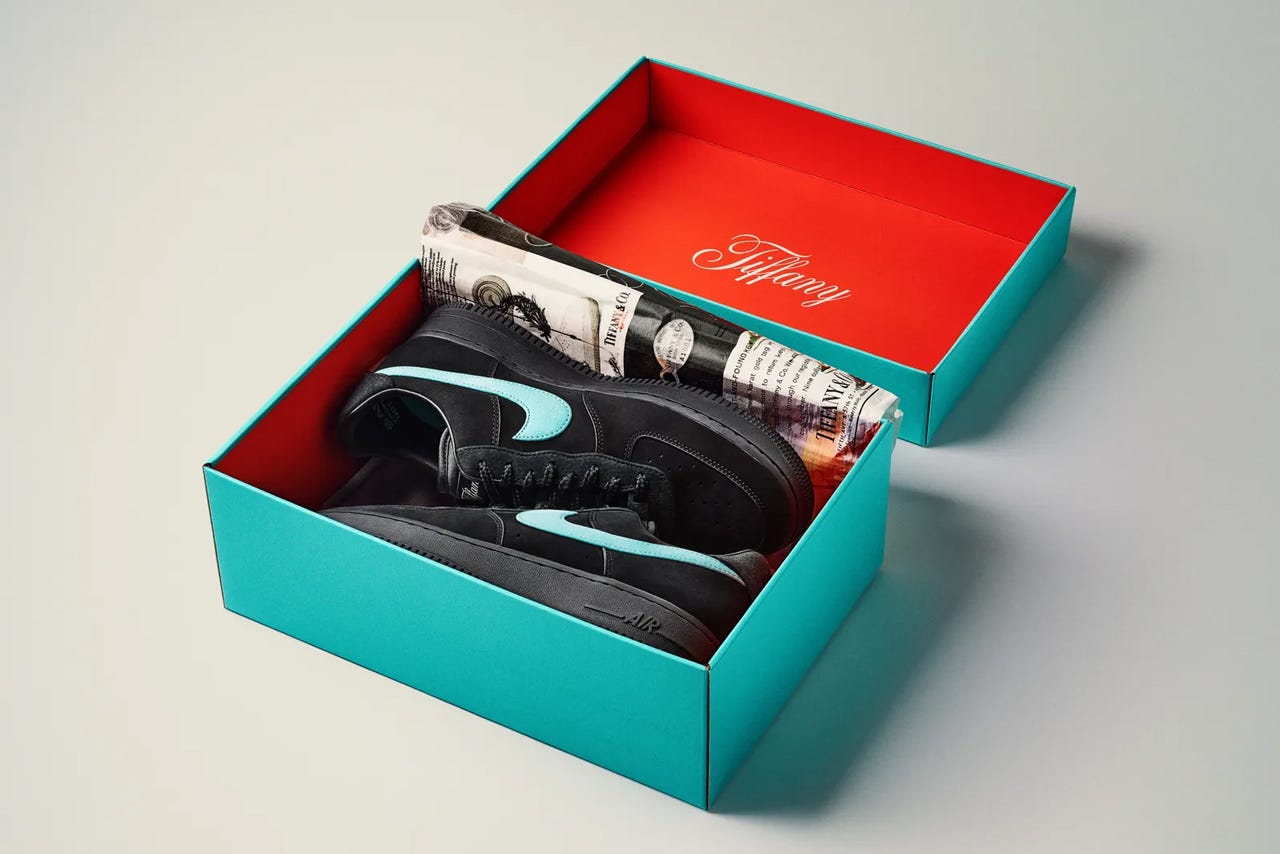
When you heard the news of Nike and Tiffany's collaboration a few weeks ago, what was the first thought or image that came to your mind? For me, strangely enough, it was the movie ‘Uncut Gems’(if you want to check it out, here’s the trailer. If you haven't seen it, it's on Netflix so, please do watch it. It's a movie that offers an incredible level of immersion.)
This movie is literally about a story that revolves around a piece of ‘uncut gems’, gambling, sports and money, so I thought there would be jewellery in this collaboration. According to what has been released so far here, I was wrong.
Hypebeast released the article about it and I found it interesting because I could learn about the history of Diamond Supply Co.'s SB Dunk Lows or a bit part of sneakerhead culture. The sentence that made the most impression on me was the following:
“Nowadays, collaboration is often less about storytelling or celebrating culture and more about creating a flash of instant gratification that briefly breaks a potential consumer’s doomscroll.”
I worked at LINE FRIENDS from 2017 to 2018, and was in charge of several brand collaboration projects. During that time, I studied various brand collaboration cases and thought about what LINE FRIENDS’ collaboration strategy should be. Today, I want to talk about collaboration again, bringing back those memories. Why do brands collaborate? Is brand collaboration still a well-functioning tactic?
First of all, I was thinking of the brand collaboration product I bought most recently. It's a shoulder bag from the OBEGRÄNSAD collection, a collaboration between IKEA and Swedish House Mafia.
When you check out its brand film, it explains that the goal of this collaboration is "to address the needs of home music creators" while creating an environment that encourages music, home, and creativity, with a high degree of completion of design but still affordable. The reason I bought the shoulder bag in particular from the collection is that it is a product that IKEA does not usually sell the shoulder bag. As you can see, the scarcity described as Limited Edition seems to be one of the essentials of collaboration. IKEA also announced a collaboration collection with the Finnish fabric brand Marimekko recently, and I'm looking forward to seeing what creative product lines will come out beside the expected product lines such as bedding and cushion covers!
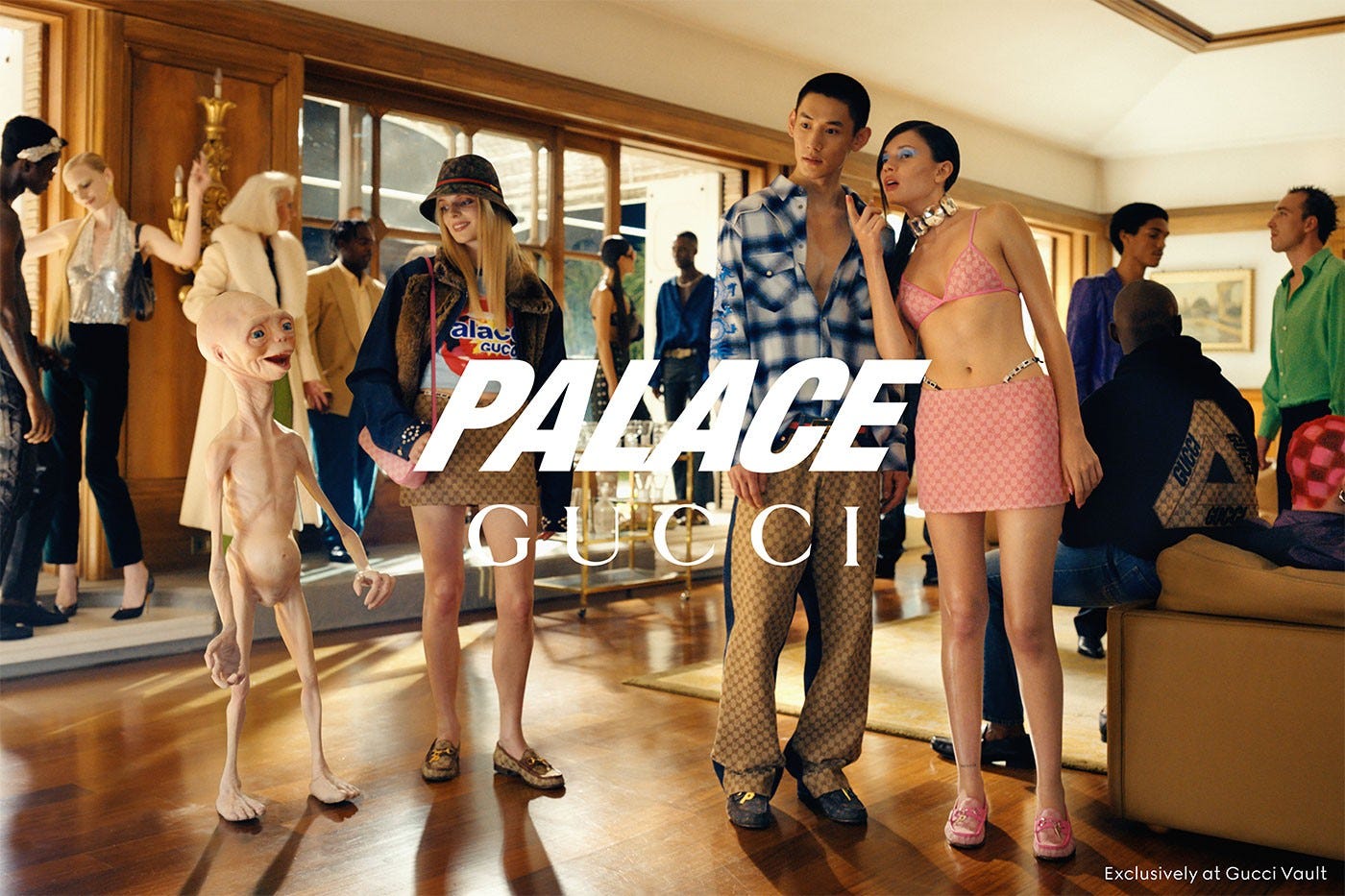
When I look back at my time at LINE FRIENDS, it seems that there were 100 different goals to achieve through collaboration, if there were 100 brands in the world. Some brands were passive towards collaboration, while others were welcoming and prepared. In the fashion category, particularly streetwear, many brands were actively involved in the collaboration. On the other hand, in the product category that cherishes its heritage, many brands were more passive towards collaboration. Fast forward several years, and now we often see brands like Kith and Palace, where collaboration is the main focus.
The collaborator may be a brand that sells physical products or services, but it can also be one with intangible value and IP as a product. For example, the Nike x Tiffany collaboration is a physical x physical project. LINE FRIENDS initially collaborated with physical brands through its character IPs. Netflix and Spotify have collaborated in various ways. Recently, they announced the Netflix show’s soundtracks as playlists on Spotify, podcasts about the show’s production process and other stories about their crime docs. They also released new features such as audiobooks and the successful show YOU's a new season. This is a collaboration between a software service and the show’s IP.
Without regard to form, it seems that collaboration projects are usually successful when two brands can expect a win-win situation from each other. Most projects also have longer-term goals in terms of brand recognition, rather than increasing short-term profits through sales.
The most common goal of a project is likely to tap into a new demographic. When selecting a brand to collaborate with, criteria such as;
the other party's strong and loyal fan base,
the other party’s broader consumer coverage than our brand
the other party’s current consumers are the target audience that our brand wants to expand to
should be taken into account.
And if your brand decides to collaborate, you can gain the following advantages:
Generate excitement and interest in a product launch, demonstrating your dedication to innovation.
Split the cost of marketing and promotion, making it more cost-effective and easier to reach different target audiences.
Utilize each brand's sales channels to expand coverage at a lower cost.
Now, let's introduce the projects that came to mind while thinking about these things.
Minecraft
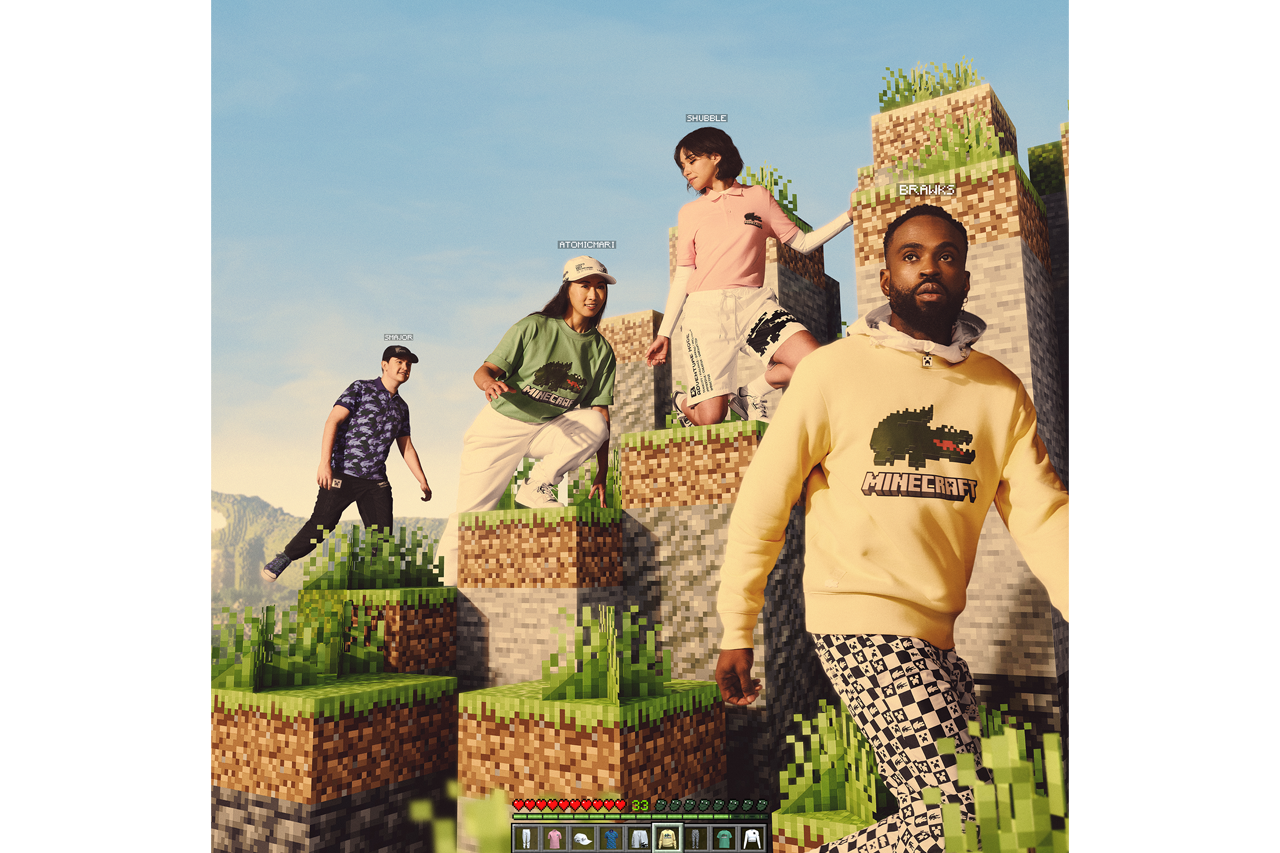
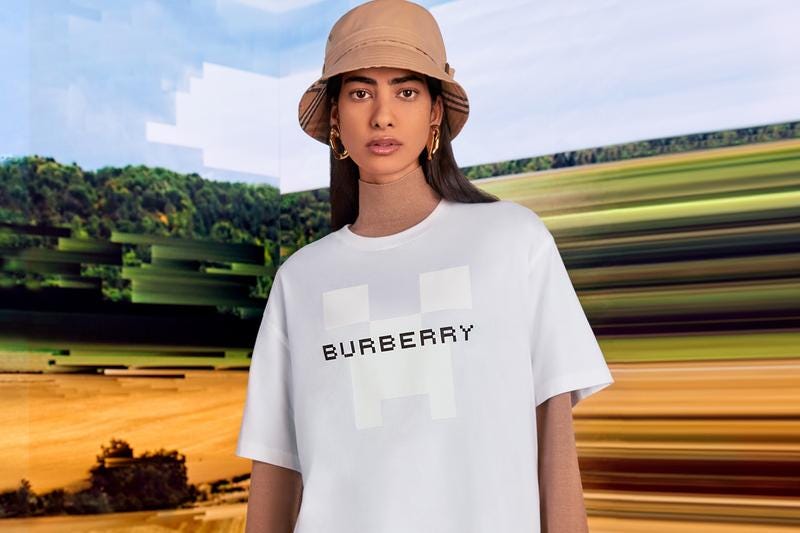
Last year, Mojang Studios' Minecraft had various collaborations with different brands, such as AAPE, Burberry, Lacoste, PUMA and Uniqlo. It's likely that these brands were drawn to Minecraft's strong brand power, especially among Gen Z and Alpha, its super wide fan base, and its clear visual identity.
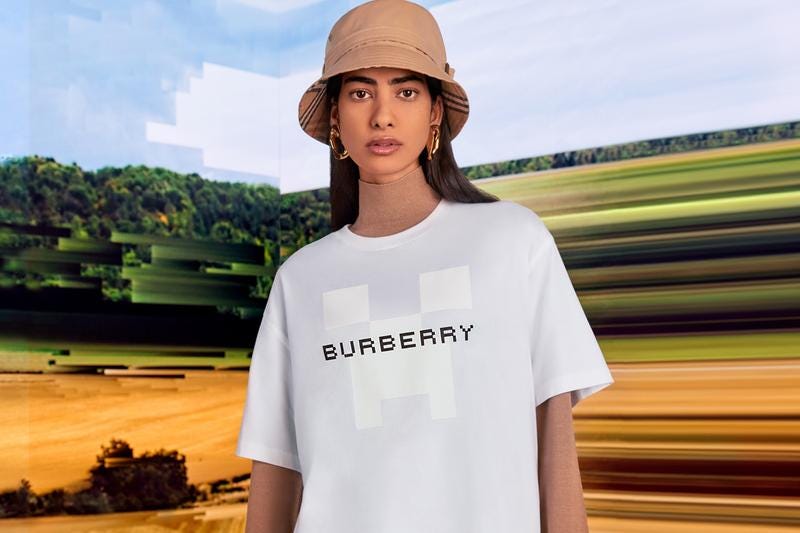
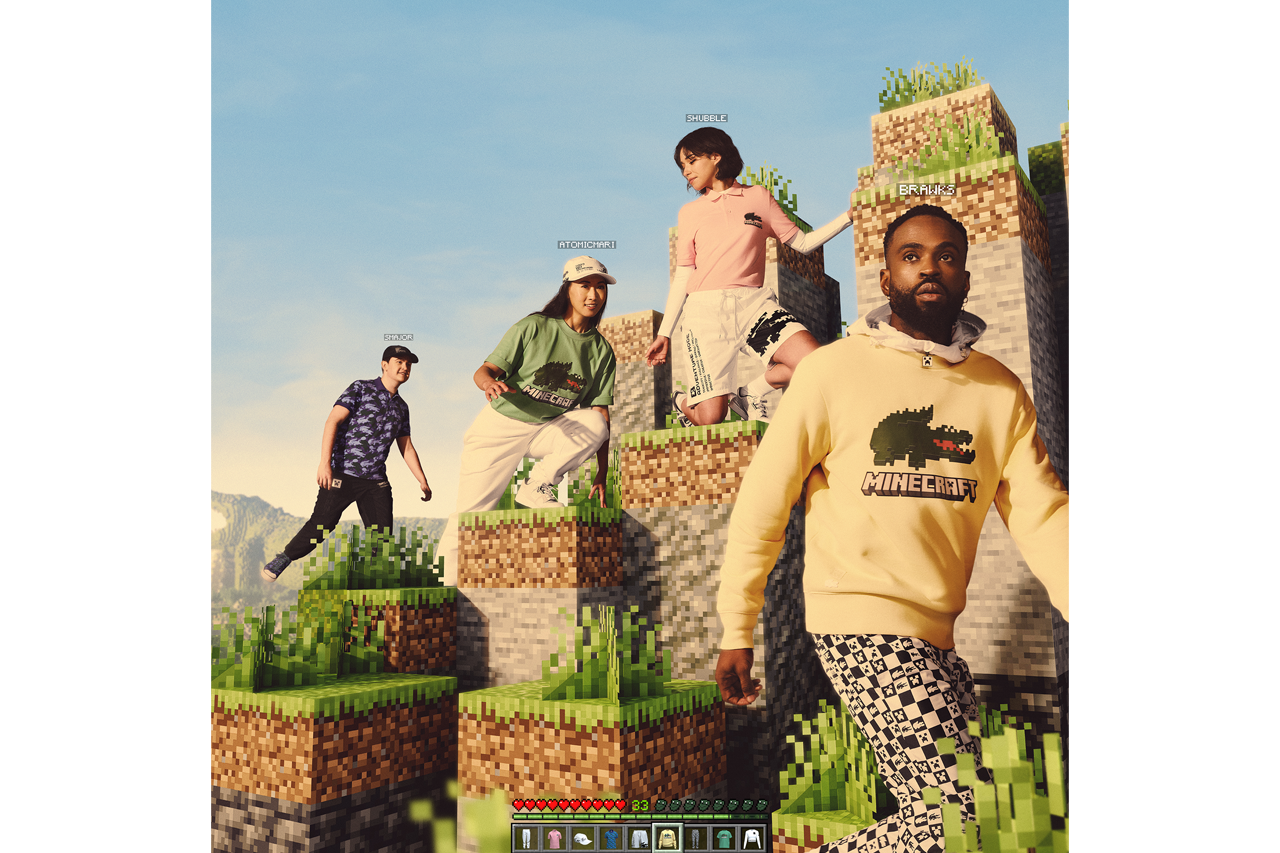
In 2022, several brands collaborated and announced their products within a few months of each other. As they all had different target audiences and price ranges, it seemed like an experiment to explore the possibilities before committing to a full-fledged collaboration and licensing business. Of all the collaborations, I found Lacoste the most interesting. When you hear "Minecraft and Lacoste collaborated", you can imagine pixelated Minecraft-ish iterations of Lacoste’s crocodile motif. The launch event was also impressive, blending the e-sports scene with fashion. Check it out here.
Minecraft is also actively collaborating with other IPs, such as the DLC with 'Star Wars' and 'The Mandalorian' ‘Star Wars’ and ‘The Mandalorian’. It's still the world's most popular game, so it's exciting to see what projects Minecraft will bring in the future.
Samsung Galaxy Z Flip4 x Maison Margiela
Samsung Galaxy Z Flip4 released a limited edition in collaboration with Maison Margiela. The phone itself was specially designed with Maison Margiela’s signature white colour, and the collaboration edition also included accessories such as cases with Maison Margiela’s stitch motif, and also UX components such as background images, theme and customized icon designs. It was released in China, France, and Korea in December 2022.
It is not the first time that Galaxy has collaborated with a luxury fashion brand. Previous collaborations include Korean fashion designer JUUN.J and the Thom Browne edition, released in 2020. These brands might have been chosen according to specific goals and standards, but Maison Margiela appears to be more intuitively matched with the Galaxy Z Flip in terms of its positioning and user profile. It would be great to see more striking designs and wider coverage of countries in future collaborations.
BT21 and LINE Friends
LINE FRIENDS started as characters in stickers that could be sent through the messenger app LINE, one of the ‘Super App’, which is the number one messenger app in Japan and has a strong market share in other Southeast Asian countries.
The characters were loved and became official characters, and then licensing and retail businesses using the character IPs began. Before I joined, during my employment, and even after I left, LINE FRIENDS collaborations continued to progress and evolve, from product collaboration with European brands to global brands, and to collaborations between IPs.
In 2015-2016, which can be divided into the first phase, you can see collaborations with European, especially Scandinavian brands. At this time when LINE just started the business, we can assume that they wanted to break away from the fixed concept of the character industry, which is usually considered a target consumer for children, appealing to design-savvy young women customers. As a result, various European brands such as German stationery brand Lamy, Finnish tableware brand ARABIA, and lighting brand Mr. Maria from Amsterdam have completed projects with LINE. If you look at the brand films, you can hear that most of the partner brands wanted to reach out to the younger generation in the Asian region through the project.
Since 2017, in addition to the second project with brands such as British foldable bicycle brand Brompton and Lamy in the first phase, collaborations with global brands such as Beats by Dr. Dre, Helvetica and Maison Kitsune have also been conducted.
One of the most remarkable developments of this period is the birth of a new character IP called BT21. BT21 is a collaboration between K-pop band BTS and a creative team to create a unique character and its world. I was part of the first BT21 collaboration, the Converse project, and it made me reflect on the importance of storytelling. BTS had a song called Converse High, which was a perfect fit for the relationship between BT21 and Converse. And also it opened the door of opportunity to do a collaboration not just between brands or products, but with celebrities and even other characters.
Since then, LINE has collaborated with K-POP Idols like ITZY, Treasure, and Jisoo of Blackpink; games like Brawl Stars and Kartrider; and other character entities like MINIONS and Pinkfong.
The final sentence of the Hypebeast piece is this:
“If they’re going to be leading the cultural charge, they owe it to us, the consumers, to keep pushing the envelope instead of chasing viral moments.”
Nike and Tiffany sought to gain more than a "wow" moment from their collaboration. While they already had strong brand recognition in their respective categories, they wanted to create something more. The result of the project was a safe choice, but it begs the question: could there be a secondary line of jewellery too?
Brand collaborations are no longer novel, but remain an effective way to mix brands, products, content, art, and celebrities. We are yet to see a new genre of brand collaborations that cross over. What brand collaborations would you like to see in 2023? 👀